Government Urged to Protect Trusted Journalism in the AI Era
NewsBrands Ireland has called on Government to introduce a policy framework that safeguards the future of trusted journalism, warning that current developments in artificial intelligence and the implementation of the recent Karshan employment ruling risk undermining the sustainability of independent news publishing in Ireland.
The organisation made the call at its annual Oireachtas briefing, which brought together TDs, Senators, political advisers, Department officials and senior representatives from Ireland's news publishing sector.
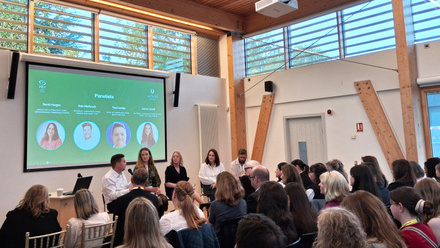
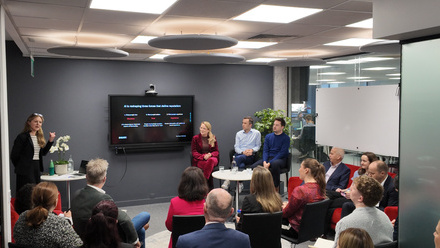
Held in Leinster House, the briefing, which was facilitated by Deputy Brendan Smith, examined the growing importance of trusted journalism in an increasingly complex digital information environment and the need for Government policy to support a sustainable future for public-interest journalism.
A panel discussion, chaired by Daniel Murray, Policy Editor at the Business Post, featured Colm O'Reilly, Chief Operating Officer of the Business Post; Michael Sheehan, Chief Financial Officer of the Irish Times Group; and Linda O'Reilly, Managing Editor of The Anglo-Celt. The panel explored the opportunities and challenges facing Irish news publishers, with a particular focus on trusted journalism, artificial intelligence, copyright and the impact of the Karshan ruling on independent news publishing.
NewsBrands Ireland said publishers across Ireland continue to invest significantly in original journalism, digital transformation and innovation. However, it warned that unless Government policy evolves alongside these investments, the long-term sustainability of independent journalism will be placed at risk.
A central issue discussed was the implementation of the Karshan ruling and Revenue's revised employment framework. While NewsBrands Ireland said it fully supports proper worker classification and compliance with employment and tax law, it warned that the absence of sector-specific guidance risks creating unintended consequences for journalism.
The organisation said freelance journalists are essential to the news eco system, and warned that increased costs and reduced commissioning budgets could lead to fewer freelance opportunities and a reduction in the diversity of voices represented in public debate.
NewsBrands Ireland also highlighted the opportunities and challenges presented by artificial intelligence, stressing that innovation must be supported by strong intellectual property protections.
The organisation called on Government to strengthen Ireland's implementation of the EU Copyright Directive and ensure copyright is protected within the EU AI Act, including greater transparency on how publisher content is used by AI systems, fair compensation for original journalism and meaningful engagement between AI providers and rights holders to establish sustainable licensing arrangements.
Speaking at the event, Sammi Bourke, Chair of NewsBrands Ireland, said:
"Trusted journalism is one of the cornerstones of our democracy. Every day, professional journalists hold power to account, inform citizens, strengthen communities and provide trusted information at a time when misinformation and disinformation have become among the greatest challenges facing democratic societies.
Ireland's news publishers have embraced innovation and recognise the enormous opportunities presented by artificial intelligence. But innovation must be accompanied by responsibility. Original journalism cannot continue to be commercially exploited without transparency, permission or fair compensation.
The implementation of the Karshan ruling is another example of where well-intentioned policy risks having unintended consequences. We fully support compliance with employment and tax law, but journalism operates differently from many other sectors. Without practical guidance for genuine freelance arrangements, publishers face higher costs, fewer opportunities to commission specialist and local journalism and, ultimately, fewer voices represented in public debate.
The future of trusted news depends on the policy decisions made today. Supporting independent journalism is not just about protecting an industry - it is about safeguarding democracy, strengthening accountability and ensuring citizens continue to have access to trusted, high-quality news."
During the briefing, NewsBrands Ireland highlighted the continuing importance of trusted news to Irish society. Research shows that 80% of Irish people read an Irish print or digital news publication every week, while Irish print and digital news brands remain the country's most trusted sources of news. Independent research also shows that eight in ten people aged 16–29 engage with an Irish news brand each week, demonstrating the continued relevance of professional journalism across all age groups.
The organisation also referenced the growing global threat posed by misinformation and disinformation, noting that the World Economic Forum has identified disinformation as one of the world's most significant risks. NewsBrands Ireland said strong, independent journalism remains one of society's most effective defences against false and misleading information.
Concluding the briefing, NewsBrands Ireland urged Government to ensure future policy supports both responsible innovation and a sustainable news ecosystem. It warned that a weaker news industry would mean fewer journalists, less local reporting, reduced scrutiny of public institutions and greater vulnerability to misinformation and disinformation.